Water Safety in Colorado
Water Safety in ColoradoKnow the Principles. Know the Water.
Water safety begins with principles that apply wherever people encounter water. But pools, lakes, reservoirs, rivers, and streams do not behave the same way. Safer decisions require understanding not only what you can do in the water, but the water itself.
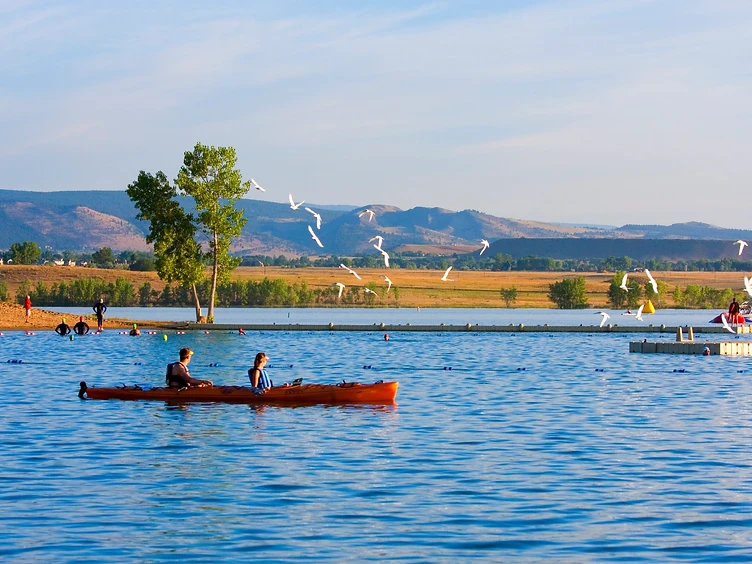
Boulder Reservoir.
Universal Principles. Different Environments.
The fundamentals of drowning prevention do not disappear when the setting changes. Water competency, appropriate supervision, life-jacket use, awareness of hazards, safe rescue, and emergency preparedness remain important across aquatic environments.
What changes is the environment in which those principles must be applied.
A controlled swimming pool is intentionally designed to reduce uncertainty. Natural water is not.
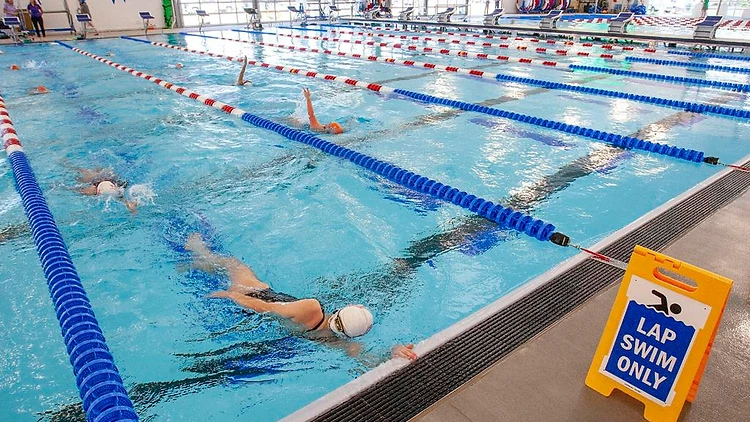
Controlled Aquatic Environment
- known depth and boundaries
- controlled entry and exit
- relatively predictable water conditions
- high visibility
- defined swimming areas
- trained supervision or lifeguards where provided
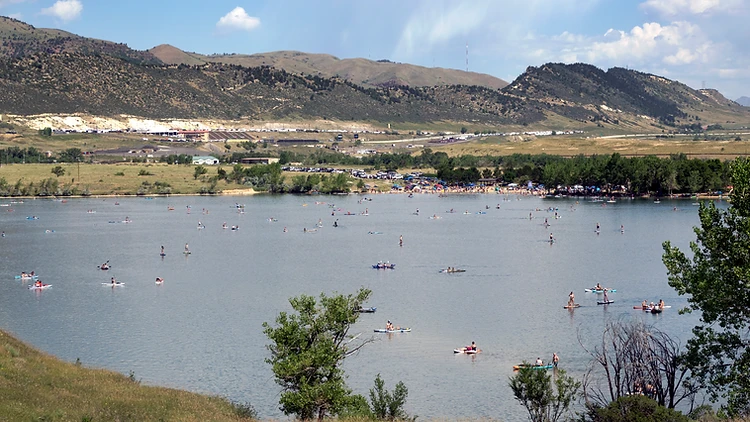
Natural Aquatic Environment
- changing depth
- currents and moving water
- changing temperature
- limited visibility
- underwater hazards
- wind and weather
- changing shoreline or water levels
- potentially delayed emergency response
A strong swimmer is not automatically prepared for every body of water.
Swimming ability matters. So do judgment, environmental awareness, appropriate equipment, and knowing when conditions exceed your abilities.
Learn more: What Is Water Competency?Colorado Water Is Often Cold Water
Colorado Parks and Wildlife (CPW) advises that Colorado waters are considered cold water for much of the year and warns that sudden immersion can cause cold-water shock even in strong, experienced swimmers.
Cold-water immersion can trigger:
- involuntary gasping
- rapid breathing
- loss of breathing control
- rapid loss of effective swimming ability as muscles cool
- increased difficulty performing even familiar swimming movements
Warm air
does not mean
Warm water
Air temperature is not water temperature. A warm Colorado day does not necessarily mean the water is warm.
Dress for the water,
not the weather.
If you are going out on the water, wear a properly fitted life jacket. Do not wait for cold weather, rough water, or an emergency. Falls, capsizes, changing conditions, and unexpected immersion can happen quickly, and swimming ability does not replace flotation.
Then prepare for the water temperature. Check the water temperature before you go. When the water is cold, clothing that is comfortable on shore may provide little protection during immersion. Depending on the activity and conditions, appropriate cold-water protection may include a wetsuit, drysuit, or other suitable thermal protection.
If you are not equipped for the conditions, stay off or out of the water.
Colorado Parks and Wildlife guidance for Colorado waters: "Dress for the water temperature, not the air temperature."
Before You Get In the Water
- Life Jacket
- Baseline protection when going out on the water.
- Cold-Water Protection
- Additional protection based on water temperature, activity, and conditions.
- Not Prepared for the Conditions?
- Do not enter the water.
Mountain Water Changes the Equation
Many Colorado lakes, reservoirs, rivers, and streams are connected to mountainous watersheds, and their conditions can be influenced by snowmelt and cold upstream sources. That is characteristic of many Colorado aquatic environments, not all of them, and it does not make these conditions unique to Colorado.
Water that begins high in Colorado's mountains can remain cold even when conditions on land feel warm. Rivers and streams may also change substantially with seasonal runoff, precipitation, reservoir releases, and local conditions.
Don’t judge the water by the weather on shore.
Lakes and Reservoirs Are Not
Swimming Pools
Many Colorado lakes and reservoirs are popular places to swim, paddle, and spend summer days. But they are natural water, and the environment around them can involve:
- depth
- changing bottom contours and drop-offs
- limited underwater visibility
- cold water
- wind
- distance from shore
- submerged objects or vegetation
- changing conditions
CPW notes that lakes and reservoirs can be very deep and specifically warns swimmers not to overestimate their abilities in deep, cold water. CPW also notes that at CPW-operated swimming locations, there are no lifeguards on duty. That fact applies to CPW-operated locations and does not describe every lake, reservoir, beach, or swimming area in Colorado, so check locally before you go.
In natural water, you may be responsible for your own
margin of safety.
Moving Water Changes the Risk
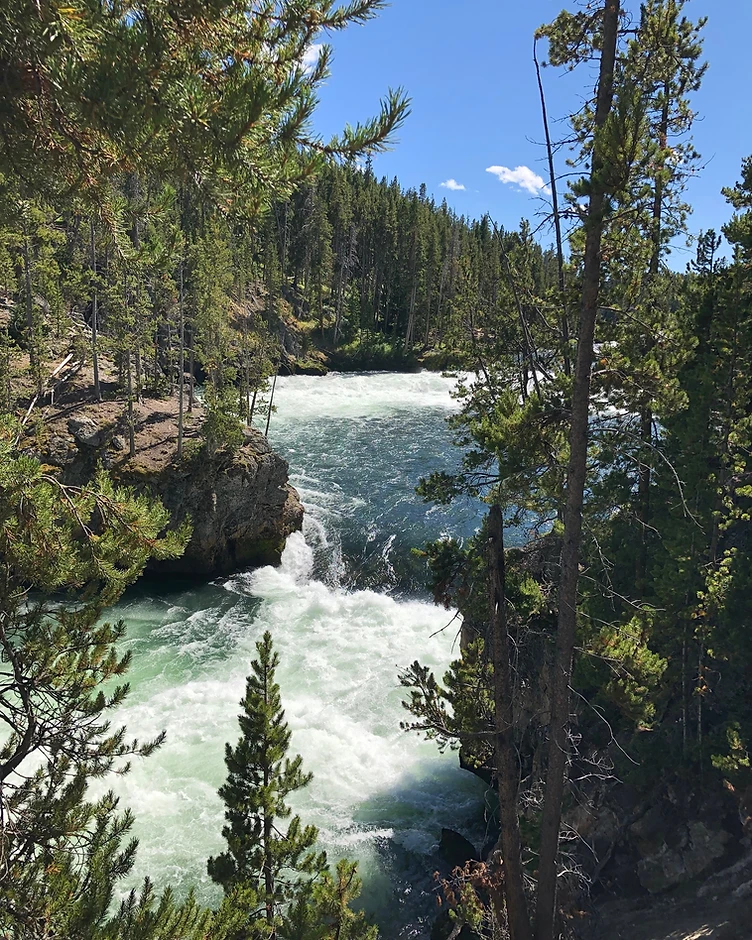
Moving water in a mountain environment. Photo: Jerrod Brown / Colorado Aquatics Foundation
What changes in moving water?
- current
- changing flow
- rocks and underwater obstacles
- cold water
- limited visibility
- changing conditions
- difficult entry and exit
- the possibility that conditions are stronger than they appear from shore
Moving Water Requires a Different Approach.
- assess conditions before entering
- respect closures and warnings
- use appropriate equipment
- understand personal limitations
- seek activity-specific guidance and instruction
This article does not provide technical whitewater instruction or swift-water rescue training. Those are specialized skills that deserve qualified, in-person instruction. For detailed river, paddling, and boating guidance in Colorado, review Colorado Parks and Wildlife's water-safety and boating-safety resources directly.
The Environment Is Part of
the Safety Decision
Conditions around natural water in Colorado can change during a visit, and conditions should be assessed before and during time around the water. Factors worth attention include:
weather, wind, water temperature, current and flow, visibility, water level, distance from assistance.
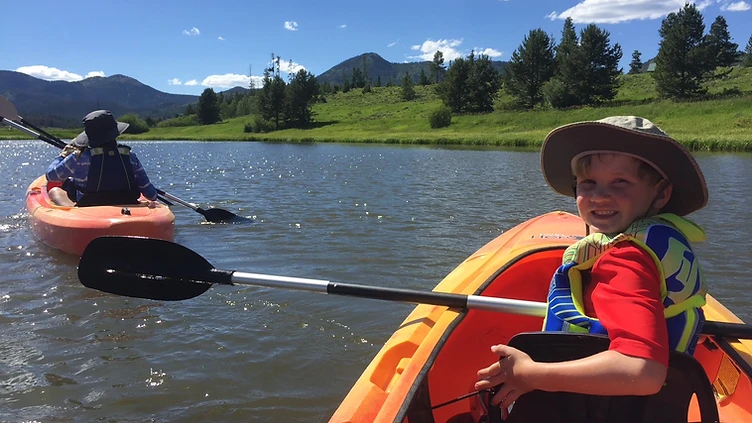
Kayaking on mountain water. Photo: Jerrod Brown / Colorado Aquatics Foundation
The question is not only
Can I swim?
It is also
Do I understand this water today?
Life Jackets Change the Margin for Error
Swimming ability does not replace a life jacket.
The CDC and Colorado Parks and Wildlife both emphasize properly fitted life jackets as an important layer of protection during boating and many activities around natural water.
- use appropriately sized life jackets
- understand when they are required
- wear them, rather than merely having them nearby, when conditions or activities call for them
- give children particular attention around natural water
Flotation toys and pool floaters are not substitutes for approved life jackets.
This article is not a complete boating-law guide. For current Colorado requirements, review Colorado Parks and Wildlife's boating and life-jacket guidance directly.
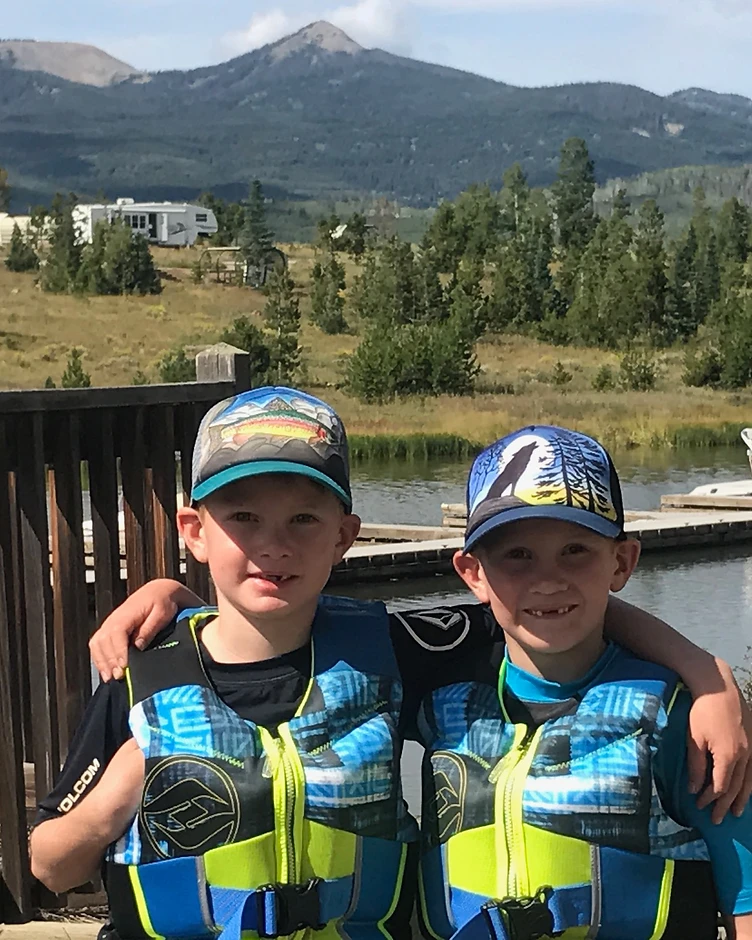
Steamboat Lake, Colorado. Photo: Jerrod Brown / Colorado Aquatics Foundation
Before You Enter Natural Water
A quick, practical sequence of questions and checks, not a substitute for
activity-specific outdoor-safety instruction.
Know the conditions
Check weather, water conditions, warnings, closures, and activity-specific guidance.
Know the temperature
Do not assume warm air means warm water.
Know your ability
Swimming ability in a pool does not guarantee the same performance in natural water.
Use the right equipment
Use an appropriately fitted life jacket when appropriate or required.
Know the environment
Understand depth, current, entry and exit points, visibility, and potential hazards.
Have a plan
Know who is supervising, how help would be reached, and what you would do if conditions change.
Learning in a Pool. Preparing for a World of Water.
The underlying water-safety guidance comes from established authorities including the American Academy of Pediatrics, Centers for Disease Control and Prevention, and Colorado Parks and Wildlife. The following reflects how Colorado Aquatics Foundation interprets that guidance in the context of its mission.
We cannot recreate every Colorado aquatic environment inside a swimming pool. We can help people build the skills, knowledge, judgment, and respect for water that prepare them to interact with those environments more safely.
Controlled aquatic environments provide places to learn, practice, develop swimming ability, build water competency, become familiar with safety equipment, and prepare for emergencies.
But preparation should also teach people to assess the environment they are entering. That is why Colorado Aquatics Foundation views aquatic education as more than learning how to move through water. It is also learning how to make safer decisions around water.
Know the principles. Know the water.
Last reviewed: September 2026
Primary Sources
- Colorado Parks and Wildlife, Water Safety
- Colorado Parks and Wildlife, Boating Safety
- American Academy of Pediatrics, Prevention of Drowning: Policy Statement, Pediatrics, July 2026
- American Academy of Pediatrics, Prevention of Drowning: Technical Report, Pediatrics, July 2026
- CDC, Drowning Prevention
- National Drowning Prevention Alliance

Colorado Aquatics Foundation provides educational information and connects readers with authoritative water-safety resources. This information is not a substitute for professional medical, emergency, or safety guidance.